
Guide

Bikes

Buying a used motorcycle: confirm its ABS and warning lights

Confirm the exact bike's braking equipment, compare its warning-light behaviour with the manual and have concerns checked by a qualified workshop.
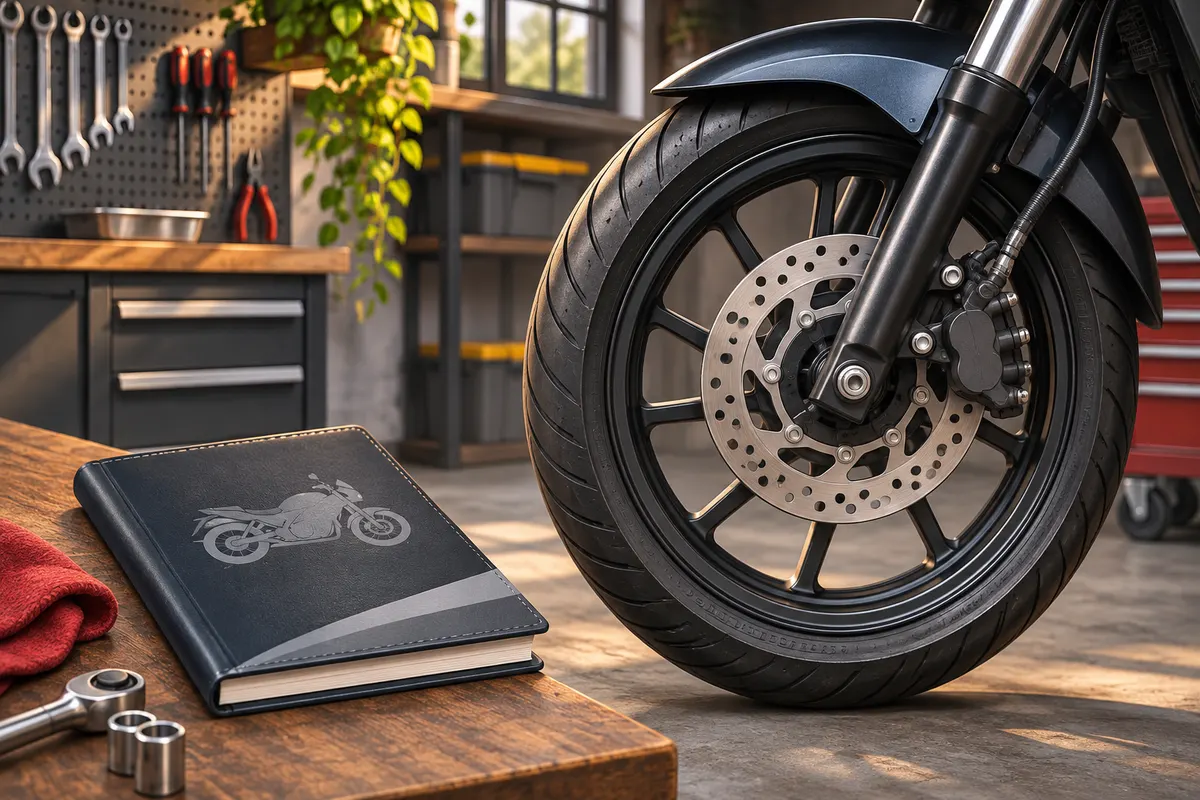
Illustration of a motorcycle front wheel and a closed manual in a workshop

Confirm the motorcycle's exact variant and braking specification, then use its own manual to identify the ABS indicator and expected behaviour. Ask a qualified workshop to assess unresolved warnings, damage and previous brake work. A disc brake, an ABS sticker or a brief ride does not by itself verify that an anti-lock system is fitted and working.

Confirm which system the variant has

Ask for the full model, manufacture period and variant. Ask the manufacturer or its authorised workshop to identify the braking specification for that actual vehicle. Write down whether ABS is confirmed and which wheels the system controls.

Honda's ABS explanation describes anti-lock braking and an ABS indicator. Its separate Combi Brake System explanation describes distributing braking force between front and rear wheels. Treat those as distinct equipment descriptions; ask for the actual bike's specification rather than accepting “disc” or “combi” as confirmation of ABS.

A current model page may describe a later version of the motorcycle. Resolve the identity before using its equipment list to compare two adverts.

Read the indicator instructions before judging it

Ask the seller to show the relevant manual and identify the lamp with you while the motorcycle is stationary. Record the observed behaviour and what the manual says should happen. Some checks continue after the bike begins moving, so a lamp seen at a standstill needs the correct context.

As a specific example, Hero's Xpulse 200 4V manual describes an ABS lamp that initially illuminates and then blinks until the bike reaches its stated low-speed threshold. It directs an unresolved ABS warning to an authorised workshop. That example should not be used as the lamp sequence for a different model or year.

Ask the workshop to perform any functional checks and explain its finding. Do not deliberately lock a wheel or attempt emergency braking to prove ABS during a viewing.

Ask about work around the brakes and wheels

Ask whether a wheel, tyre, brake component, sensor or instrument cluster has been repaired or replaced. Request the job card and ask what work remains due. Make a note of visible damage for the inspector without diagnosing it from a photograph.

Hero's same manual cautions against damage to the sensor ring during wheel work and specifies approved tyres. Ask the workshop to assess the fitted parts and any repair concern for this motorcycle. A visual ring or dashboard photograph leaves the system's function unconfirmed.

Keep the ordinary brake, tyre and mechanical inspection in the appointment. The ABS question is one part of deciding whether to buy the bike.

Take a clear note to the workshop

Motorcycle identity and variant: to confirm. ABS specification and source: to confirm. Manual version and expected indicator behaviour: to record. Observed warning and when it appeared: to record. Brake or wheel work reported by seller; supporting invoice: to obtain. Workshop finding, required work and written estimate: to obtain. Question still unresolved before payment: to record.

If a warning or equipment mismatch remains unexplained, pause the purchase decision. Ask the workshop to advise how the bike should be transported or assessed. This guide does not promise a particular repair price or certify a bike's braking performance.

Common questions

Do two disc brakes prove a motorcycle has dual-channel ABS?

Confirm the exact braking specification with manufacturer information and a workshop. The visible brake layout alone does not answer the control-system question.

Can a stationary lamp check certify the ABS?

Use it to record an observation against the manual. Leave functional assessment and unresolved warnings to a qualified workshop.

Sources

Reviewed . Check the current instructions for your vehicle before applying.

Browse used cars and bikes

This guide provides general consumer education. Verify current requirements and fees with your local Jammu & Kashmir RTO.

Checks vary by vehicle. A verified listing does not automatically mean a full physical inspection.

All guides
Bikes
3 min read

Buying a used motorcycle: confirm its ABS and warning lights

Illustration of a motorcycle front wheel and a closed manual in a workshop

Confirm the motorcycle's exact variant and braking specification, then use its own manual to identify the ABS indicator and expected behaviour. Ask a qualified workshop to assess unresolved warnings, damage and previous brake work. A disc brake, an ABS sticker or a brief ride does not by itself verify that an anti-lock system is fitted and working.

Confirm which system the variant has

Ask for the full model, manufacture period and variant. Ask the manufacturer or its authorised workshop to identify the braking specification for that actual vehicle. Write down whether ABS is confirmed and which wheels the system controls.

Honda's ABS explanation describes anti-lock braking and an ABS indicator. Its separate Combi Brake System explanation describes distributing braking force between front and rear wheels. Treat those as distinct equipment descriptions; ask for the actual bike's specification rather than accepting “disc” or “combi” as confirmation of ABS.

A current model page may describe a later version of the motorcycle. Resolve the identity before using its equipment list to compare two adverts.

Read the indicator instructions before judging it

Ask the seller to show the relevant manual and identify the lamp with you while the motorcycle is stationary. Record the observed behaviour and what the manual says should happen. Some checks continue after the bike begins moving, so a lamp seen at a standstill needs the correct context.

As a specific example, Hero's Xpulse 200 4V manual describes an ABS lamp that initially illuminates and then blinks until the bike reaches its stated low-speed threshold. It directs an unresolved ABS warning to an authorised workshop. That example should not be used as the lamp sequence for a different model or year.

Ask the workshop to perform any functional checks and explain its finding. Do not deliberately lock a wheel or attempt emergency braking to prove ABS during a viewing.

Ask about work around the brakes and wheels

Ask whether a wheel, tyre, brake component, sensor or instrument cluster has been repaired or replaced. Request the job card and ask what work remains due. Make a note of visible damage for the inspector without diagnosing it from a photograph.

Hero's same manual cautions against damage to the sensor ring during wheel work and specifies approved tyres. Ask the workshop to assess the fitted parts and any repair concern for this motorcycle. A visual ring or dashboard photograph leaves the system's function unconfirmed.

Keep the ordinary brake, tyre and mechanical inspection in the appointment. The ABS question is one part of deciding whether to buy the bike.

Take a clear note to the workshop

Motorcycle identity and variant: to confirm. ABS specification and source: to confirm. Manual version and expected indicator behaviour: to record. Observed warning and when it appeared: to record. Brake or wheel work reported by seller; supporting invoice: to obtain. Workshop finding, required work and written estimate: to obtain. Question still unresolved before payment: to record.

If a warning or equipment mismatch remains unexplained, pause the purchase decision. Ask the workshop to advise how the bike should be transported or assessed. This guide does not promise a particular repair price or certify a bike's braking performance.

Frequently Asked Questions

Do two disc brakes prove a motorcycle has dual-channel ABS?

Confirm the exact braking specification with manufacturer information and a workshop. The visible brake layout alone does not answer the control-system question.

Can a stationary lamp check certify the ABS?

Use it to record an observation against the manual. Leave functional assessment and unresolved warnings to a qualified workshop.

Sources

Reviewed . Check the current instructions for your vehicle before applying.

Disclaimer: This guide provides general consumer education. Always verify active requirements and fee structures directly with your local Jammu & Kashmir RTO.