
Guide

Cars

Buying a used family car: check child-seat fit before you pay

Take your child-seat details, check both manuals and plan a trial fit in the actual used car before agreeing the purchase.
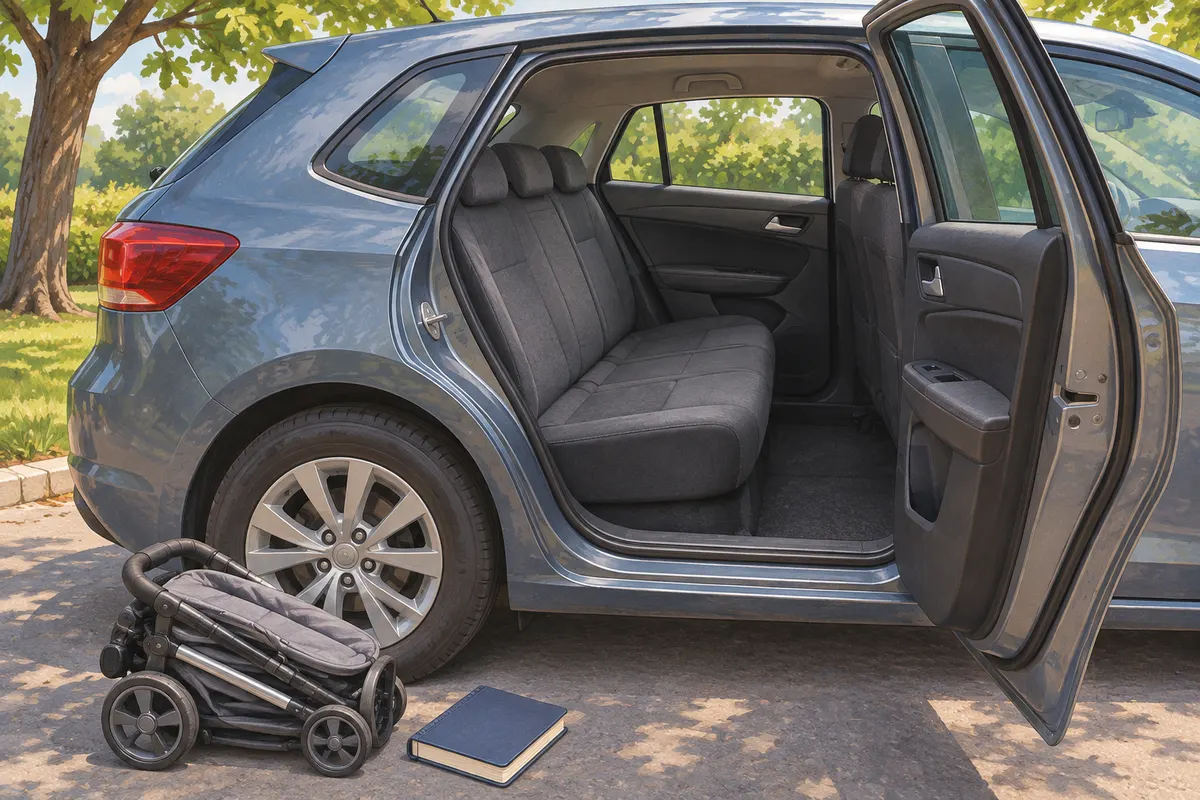
Illustration of an empty rear car seat and a family viewing checklist

Before buying a used family car, confirm that your child restraint is suitable for the exact vehicle and intended seating position. Check the car and restraint manuals, then arrange a trial installation with competent fitting help where needed. Use the same viewing to assess space for the other passengers and the luggage you actually carry.

Bring the seat details, not just a tape measure

Write down the restraint's full product name and the child's current measurements needed by its manufacturer. Take the instructions and, with the seller's agreement, the restraint itself. “ISOFIX seat” is not a complete product description.

Britax Römer's FitFinder uses child and vehicle details, but says its results cover tested vehicles and still recommends a test installation. Use a compatibility tool from your own restraint manufacturer where available. An unlisted vehicle needs an answer from that manufacturer or a competent fitter, rather than a guess..

Check the actual car and seating position

Find the manual for the car's model and manufacture period. Identify permitted positions and the attachment method your restraint requires. Hyundai India provides a 2020–January 2024 Creta manual that includes child-restraint instructions. Check the guidance for the exact vehicle and restraint. These details are specific to that manual, not proof of equipment in another car or variant.

Ask the inspector to assess questionable belts, buckles, anchorage areas or signs of repair. Do not treat a visible anchor symbol, a seller's assurance or a fitting photograph as confirmation that damaged equipment is sound. Leave installation methods and any need for a tether or support leg to the two manuals and qualified help.

Try your real family layout

During a stationary viewing, set the driver's seat to its normal position and arrange the intended seating layout. Record whether passengers can sit as intended, doors open enough for access and the restraint can be used as its manufacturer requires. Do not move the driver into an unsuitable position to make the rear seat appear larger.

Bring the pushchair or other bulky item you normally carry. Check whether it fits with the required seats in use and ask about permitted storage arrangements. If you need two child restraints, assess that exact combination together; do not assume one successful trial answers the second-seat question.

Keep a simple family-fit record

Vehicle model, variant and period: to confirm; Restraint product and relevant instructions: to confirm; Intended seating position and compatibility evidence: to confirm; Trial installation completed by / questions remaining: to confirm; Driver and other passengers accommodated: to confirm; Pushchair or luggage fit with required seats in use: to confirm; Equipment concern for the vehicle inspector: to confirm;

Complete the normal vehicle and document checks as well. Family fit is one purchasing requirement; it does not establish the car's mechanical condition or crash history.

Common questions

Does ISOFIX mean every child seat fits?

No. Check the exact restraint, vehicle and seating position, then follow both manufacturers' instructions.

Can I choose a family car from rear-seat photographs?

Photographs help you shortlist. A stationary viewing and a properly supported trial installation answer questions photographs leave open.

Sources

Reviewed . Check the current instructions for your vehicle before applying.

Browse used cars and bikes

This guide provides general consumer education. Verify current requirements and fees with your local Jammu & Kashmir RTO.

Checks vary by vehicle. A verified listing does not automatically mean a full physical inspection.

All guides
Cars
4 min read

Buying a used family car: check child-seat fit before you pay

Illustration of an empty rear car seat and a family viewing checklist

Before buying a used family car, confirm that your child restraint is suitable for the exact vehicle and intended seating position. Check the car and restraint manuals, then arrange a trial installation with competent fitting help where needed. Use the same viewing to assess space for the other passengers and the luggage you actually carry.

Bring the seat details, not just a tape measure

Write down the restraint's full product name and the child's current measurements needed by its manufacturer. Take the instructions and, with the seller's agreement, the restraint itself. “ISOFIX seat” is not a complete product description.

Britax Römer's FitFinder uses child and vehicle details, but says its results cover tested vehicles and still recommends a test installation. Use a compatibility tool from your own restraint manufacturer where available. An unlisted vehicle needs an answer from that manufacturer or a competent fitter, rather than a guess..

Check the actual car and seating position

Find the manual for the car's model and manufacture period. Identify permitted positions and the attachment method your restraint requires. Hyundai India provides a 2020–January 2024 Creta manual that includes child-restraint instructions. Check the guidance for the exact vehicle and restraint. These details are specific to that manual, not proof of equipment in another car or variant.

Ask the inspector to assess questionable belts, buckles, anchorage areas or signs of repair. Do not treat a visible anchor symbol, a seller's assurance or a fitting photograph as confirmation that damaged equipment is sound. Leave installation methods and any need for a tether or support leg to the two manuals and qualified help.

Try your real family layout

During a stationary viewing, set the driver's seat to its normal position and arrange the intended seating layout. Record whether passengers can sit as intended, doors open enough for access and the restraint can be used as its manufacturer requires. Do not move the driver into an unsuitable position to make the rear seat appear larger.

Bring the pushchair or other bulky item you normally carry. Check whether it fits with the required seats in use and ask about permitted storage arrangements. If you need two child restraints, assess that exact combination together; do not assume one successful trial answers the second-seat question.

Keep a simple family-fit record

Vehicle model, variant and period: to confirm; Restraint product and relevant instructions: to confirm; Intended seating position and compatibility evidence: to confirm; Trial installation completed by / questions remaining: to confirm; Driver and other passengers accommodated: to confirm; Pushchair or luggage fit with required seats in use: to confirm; Equipment concern for the vehicle inspector: to confirm;

Complete the normal vehicle and document checks as well. Family fit is one purchasing requirement; it does not establish the car's mechanical condition or crash history.

Frequently Asked Questions

Does ISOFIX mean every child seat fits?

No. Check the exact restraint, vehicle and seating position, then follow both manufacturers' instructions.

Can I choose a family car from rear-seat photographs?

Photographs help you shortlist. A stationary viewing and a properly supported trial installation answer questions photographs leave open.

Sources

Reviewed . Check the current instructions for your vehicle before applying.

Disclaimer: This guide provides general consumer education. Always verify active requirements and fee structures directly with your local Jammu & Kashmir RTO.